
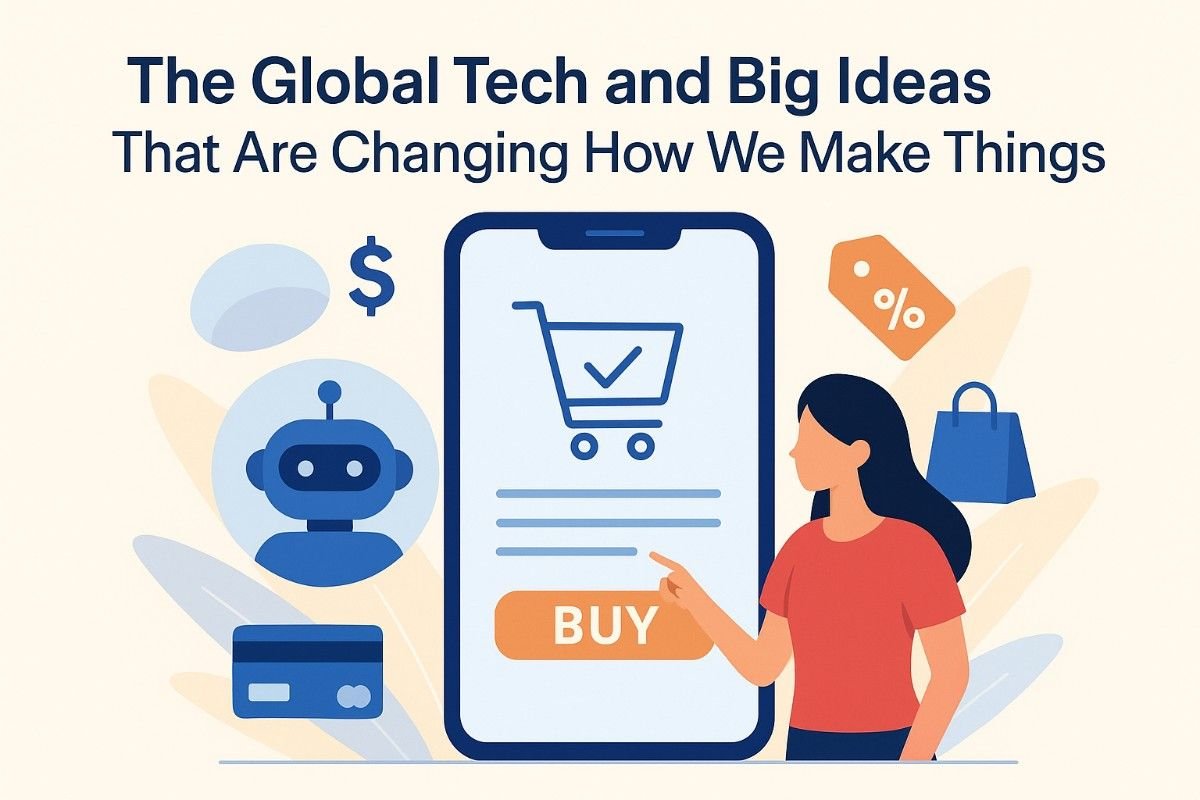
If you dwell on it, today’s shopping bears scant resemblance to that of just ten years ago. Back then, you’d visit a website and scroll through hundreds of products or local establishments, possibly read a few reviews and click to buy. Fast-forward to today — shopping sites have almost figured out what you want before you even know it yourself. You sign in and suddenly your home page is bursting with personalized suggestions, discounts just right for you, chatbots eager to help and online friends ready to commiserate.
This innovation was enabled by Artificial Intelligence (AI). From personalized product recommendations to enhanced customer service, AI is becoming increasingly integral to the way we shop online. But just how is it changing things? And what will it mean for both consumers and businesses? Let’s break it down.
Why You Should Care
With Online Shopping, Are Headless Store Fronts the Future?
In e-commerce, AI is not just a nice and catchy buzzword. It is the engine of smarter, faster and more personalized shopping experiences. With literally billions or people shopping online, no human team of watchers can possibly monitor the behavior of every shopper and predict its preferences. That’s where AI comes in — sifting through vast volumes of data instantly to make the shopping experience easier and more enjoyable.
In simple words:
- AI also helps with shoppers, personalizing and speeding up online shopping so the experience feels ever-more convenient.
- For companies, the A.I. translates to better sales, fewer returns and happy customers.
How AI is Revolutionizing Online Shopping
Here are the largest areas where A.I. is having an impact.
1. Personalized Recommendations
You know when Amazon or Flipkart shows, “products you may like”? That’s AI at work. By gleaning insights from your previous searches and purchases, AI recommends products that are highly relevant to you.
- For shoppers: A time-saving way to find items you might not know to look for on your own.
- For businesses: Additional, personalized recommendations may increase sales and the likelihood of return purchases.
And indeed, research indicates that 35% of Amazon’s revenue is generated by its AI-driven product recommendations.
2. Smarter Search and Discovery
Online product search used to be frustrating — many searches for, say “blue dress,” returned thousands of results, none relevant. Today, it is AI that makes search smarter with:
- Natural Language Processing (NLP): Understanding whats really on your mind when you type.
- Visual Search: Upload a photo of a product you love, and the system returns similar items.
- Voice Search: Tell Alexa, Siri or Google Assistant what you’re looking for —“Find me running shoes under $100.”
These enhancements help you find what you want (no infinite scrolling, for one).
3. Virtual Assistants and Chatbots
Customer service is among the trickiest aspects of shopping online. People are in a hurry for responses —“When is my order going to come?” Do they have this in my size? AI-driven chatbots and virtual assistants address this issue.
- Chatbots: They respond to FAQs, trace orders and while also suggesting products, 24/7.
- Virtual Assistants: Some of the more sophisticated bots, such as Amazon’s Alexa or Google Assistant, can manage entire shopping transactions, from discovery to payment.
This makes the shopping process more frictionless and reduces the burden on human support teams.
4. Dynamic Pricing
There’s a reason why the cost of a flight or gadget varies according to how many people want it. That’s AI-powered dynamic pricing. AI makes pricing decisions in real time based on data like the prices of competitors, demand, customer behavior and ever the time of day.
- For shoppers: You could receive offers based on your behavior (i.e., discounts on things you left in your cart).
- For businesses: It is designed to help them have a book of maximum profits in order to stay competitive.
5. Fraud Detection and Security
When there’s risk, there’s a problem to solve and a product to sell. AI systems track transactions instantly and alert on atypical activity. For example:
- If you are a regular shopper from India and then, out of nowhere, place an order in Europe, AI might need more verification.
- If several attempts to generate a payment fail within minutes of each other, A.I. can stop the suspicious behavior cold.
This is good for both consumers and businesses.
6. Trend3 — Virtual Try-Ons and Augmented Reality (AR)
One of the disadvantages of shopping online is that you can’t try before you buy. AI and AR are addressing this by offering virtual try-on tools:
- Fashion websites show you how clothes look on a digitally modeled version of you.
- Makeup lines including L’Oréal enable you to try on lipsticks and eyeliners with your smartphone’s camera.
- Furniture companies such as IKEA employ AR to demonstrate how a sofa will appear in your living room.
This lowers return rates and helps customers to feel more confident before making a purchase.
7. Inventory and Supply Chain Management
It plays a large role behind the scenes too, as AI also helps make sure the products you love are in stock and arrive at your door on time. “It helps retailers with demand forecasting so they won’t need to keep excess inventory on hand,” said Wu of the AI startup, who saw some use cases of his product in the retail and consumer goods industry.
For instance: Artificial intelligence might foresee the need for umbrellas during monsoon season in Mumbai — so stores stockpile them ahead of time.
8. Customer Insights and Sentiment Analysis
Enterprises want to know what their customers are thinking. AI reads reviews, social media posts and feedback to get a sense of how customers feel. If “slow delivery” or “poor packaging” is lobbied by many against you, a business has to react fast.
This enables the brands to better serve and relate to customers.
AI’s Benefits for Online Shopping
Let’s briefly review the benefits:
- Regarding Customers:
- Saves time with personalized recommendations
- Smart search to find products faster
- Fraud detection and safer transactions
- AR try-ons to boost purchase confidence
- For businesses:
- Increased revenue and customer loyalty
- Fewer returns and complaints
- Better inventory management and pricing
- A clearer understanding of customers
AI’s Difficulties in E-Commerce
Naturally, using AI in online shopping has challenges.
- Privacy issues
To customize recommendations, algorithms collect a lot of personal data. Consumers may worry about how their data is used. - Bias in AI algorithms
For example, AI might suggest products that support existing biases if it gets biased information. - Displacement of Jobs
Some are concerned that the use of AI in customer service will eventually replace the need for human employees. - Over-personalization
Furthermore, over-personalization could feel invasive or restrict access to new products.
Future Prospects
The future of artificial intelligence and online shopping is bright.
- Hyper-Personalization: AI will predict not only what you want but also when you’ll want it, such as bringing up the groceries you’re about to run out of. This is one of the future trends.
- Voice Commerce: Purchasing smart speakers will become a standard practice.